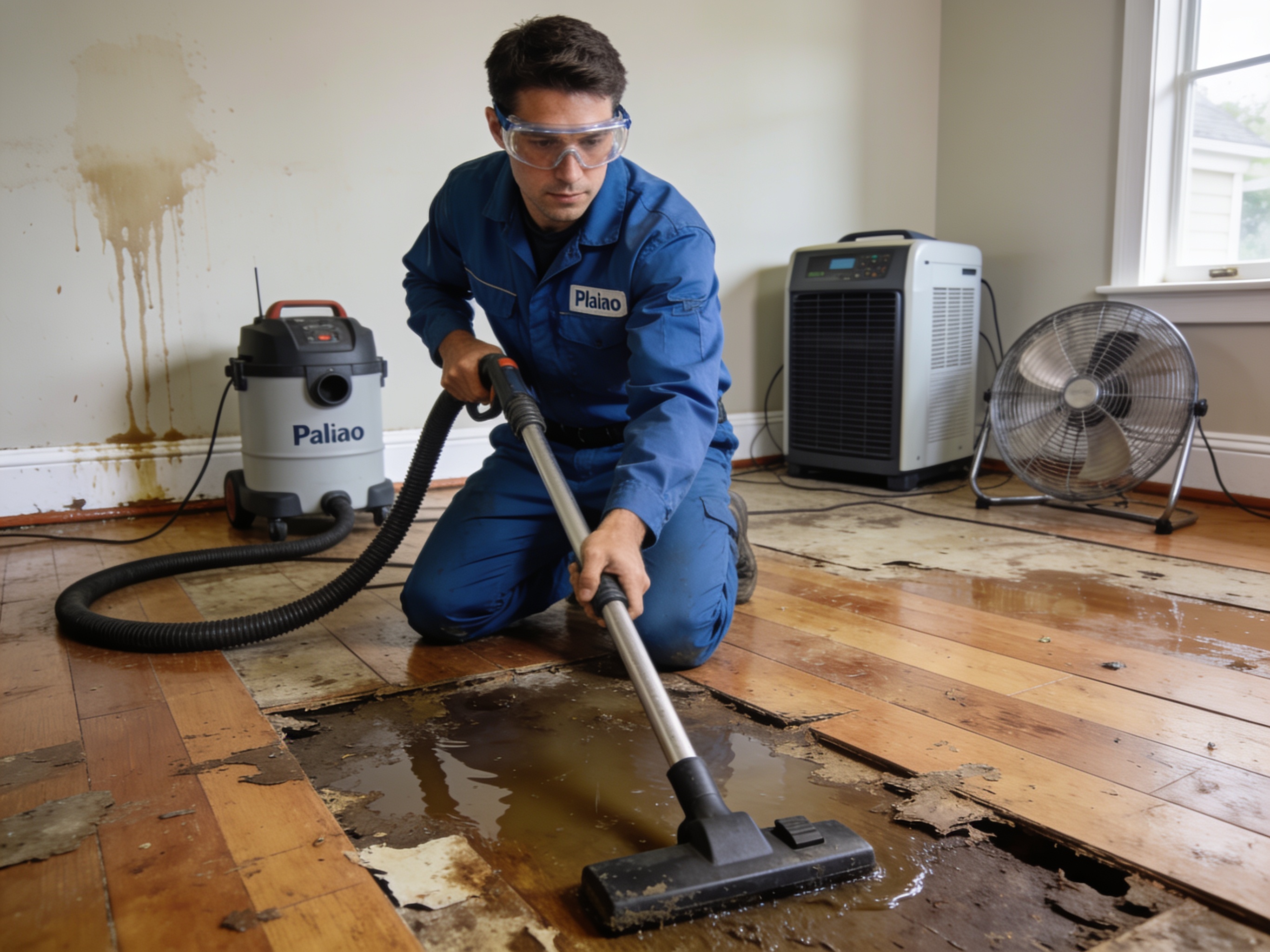
Homes in 28. Denton sit on flat Collin County lots east of downtown Plano where summer thunderstorms dump heavy rain that finds roof seams and foundation cracks fast. Our team leaves the 2600 K Ave shop and reaches these blocks within minutes, pulling carpet, drying slab edges, and stopping mold before the mild winter sets in. We know the 1970s and 1980s ranch houses here often have original cast-iron drains that split when roots push through during wet spells.
West Plano and East Plano differ in soil movement, but 28. Denton lots sit closer to the old railroad corridor where clay holds water longer after a storm. That means slower drying under slabs and more need for targeted dehumidification along K Avenue and nearby side streets. We set equipment so it clears moisture without disturbing neighbors in the tight driveways common to this tract.
When a pipe bursts in one of these single-story homes, water travels under the slab toward the street rather than pooling in a basement that does not exist. Our extraction starts at the lowest point near the curb and works back to the source, protecting the mature oak trees that line many 28. Denton yards.
Around 28. Denton
We regularly work near:
- 📍K Avenue
- 📍Legacy Town Center
- 📍Plano Convention Center
- 📍Oak Point Park
- 📍14th Street
- 📍Jupiter Road corridor
Water Damage Restoration in 28. Denton — Local Notes
- •Older cast-iron and galvanized lines in 28. Denton homes crack more often after heavy summer downpours because roots follow the shallow sewer laterals.
- •Flat lots with minimal side-yard slope mean water from Oak Point Park runoff can back up against rear foundations during Collin County storms.
- •Driveways off K Ave are narrow, so our vans park on the street and run short hoses to keep equipment out of the way of school traffic near nearby campuses.
- •Mild winters let hidden moisture linger under slabs until the next heat wave, so we always check for elevated humidity weeks after the initial call.